


Ancient Egyptian Symbols In All Modern Religions
Iconography is a guide to the essence of an institute, particularly in the religious context. It is many times the revealer of hidden truths. The iconography used in today’s religion is quite revealing. In many cases, it can be traced all the way back to Ancient Egypt. Whether it be Orthodox Christianity; Protestant; Islam; Hinduism; Bahai; or Buddhist; the roots of some of their symbols, and many items that are believed to be original to that particular belief, are traceable to Ancient Egypt. We will look at some of these symbols here.
Firstly: Egyptian Obelisk
Ancient Egypt has played and continues to play a significant role in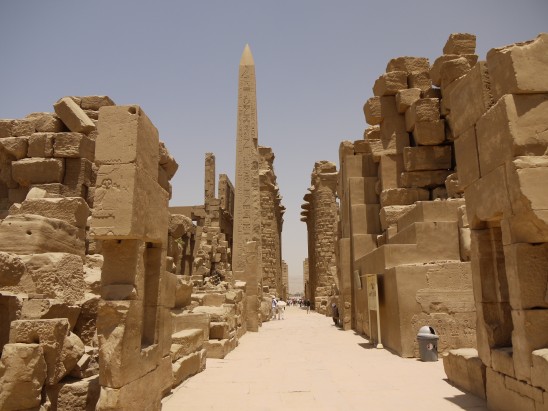 modern religions. Many of the practices and beliefs of devotees of Jewish, Christian, Hindu, and Islāmic faiths had their genesis in Ancient Egypt/Kemet. In two of my previous article – Rediscovering Amen I dealt with the word Amen – its Egyptian origin and use today. Today I would like to have a look at the Egyptian Obelisk or phallus symbol that many consider demonic. The mere sight of which, causes many to run and cower in fear. Yet that same symbol is all around them, even in their places of worship and they are totally oblivious to that fact.
The word Obelisk is of Greek origin. The original Kemetic, (Egypt was originally referred to as Kemet. Kemet means ‘the black land’), word for it being Benben or Tekhennu. They came in pairs and were placed at the entrance of the temple. The tops of the Obelisks were covered with gold so that they glittered in the sun. It was also used to honor the Egyptian Pharaoh. The Benben/Obelisk presents the phallus of the Egyptian deity Amen-Ra. It is believed to bring protection and represents resurrection.
Egyptian Obelisks In Churches & Christian Institutions
In our world today, it is not uncommon to find Obelisks everywhere. Most of us never recognize them for what they really are, for they have been ‘hidden in plain sight’. When we see them, we believe them to be just a matter of architecture and nothing more. They are on our libraries; government offices; banks; commercial businesses; homes and places of worship. Yes, you read right. On our places of worship. This is not limited to just one or even a few denominations, but all almost without exception.
In the preceding collage of pictures, we shall see a variety of Egyptian Obelisks on Christian worship structures. Places we never would expect to see these ‘pagan‘ structures.
(click on the picture below to enlarge)
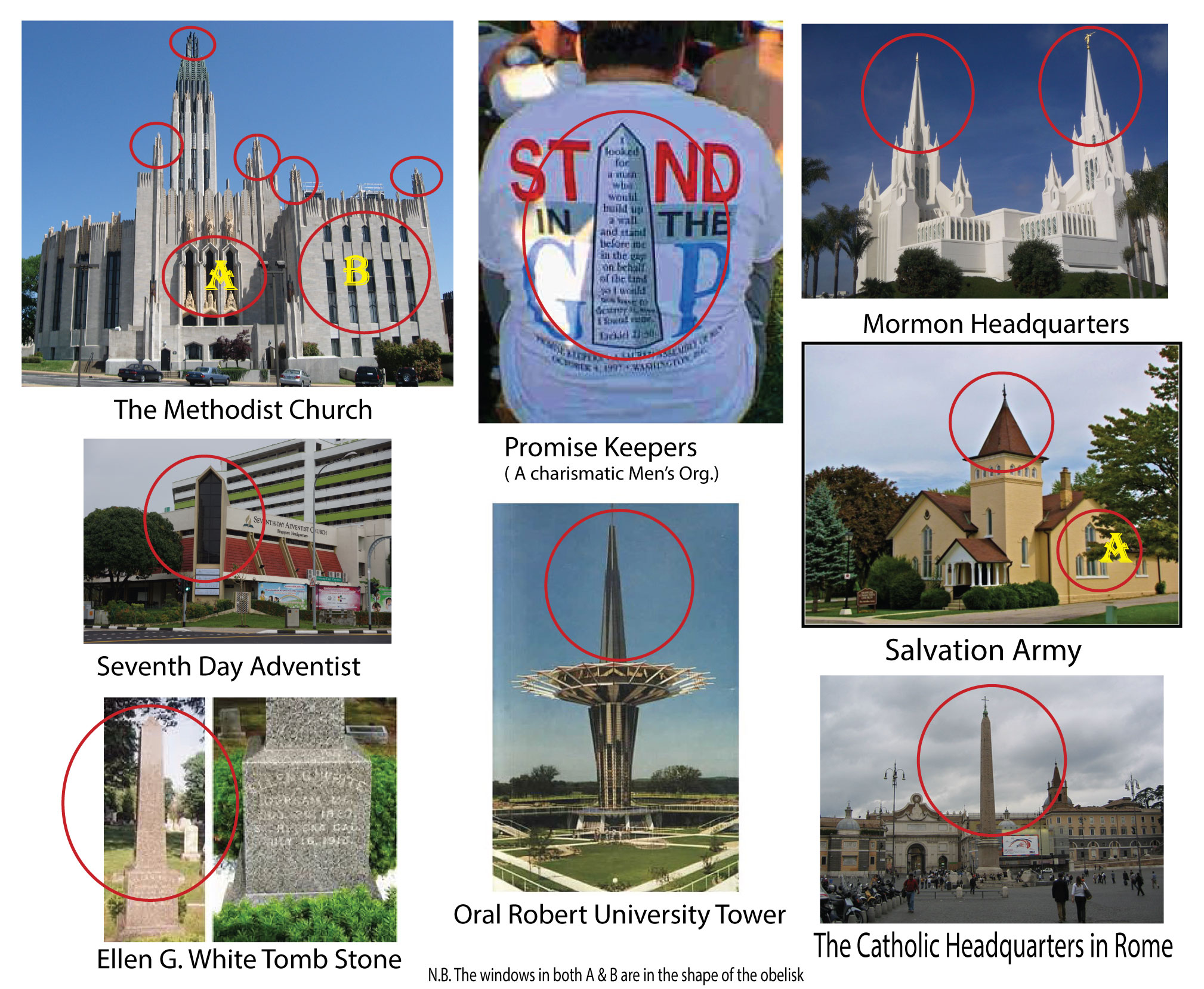
A Range of Churches Depicting Obelisks
Obelisks On Other Religions Buildings/Compounds
Obelisks can also be found on the buildings and compounds of Muslim Mosques; Hindu Temples; Buddhist Temples; and Bahai Temples. 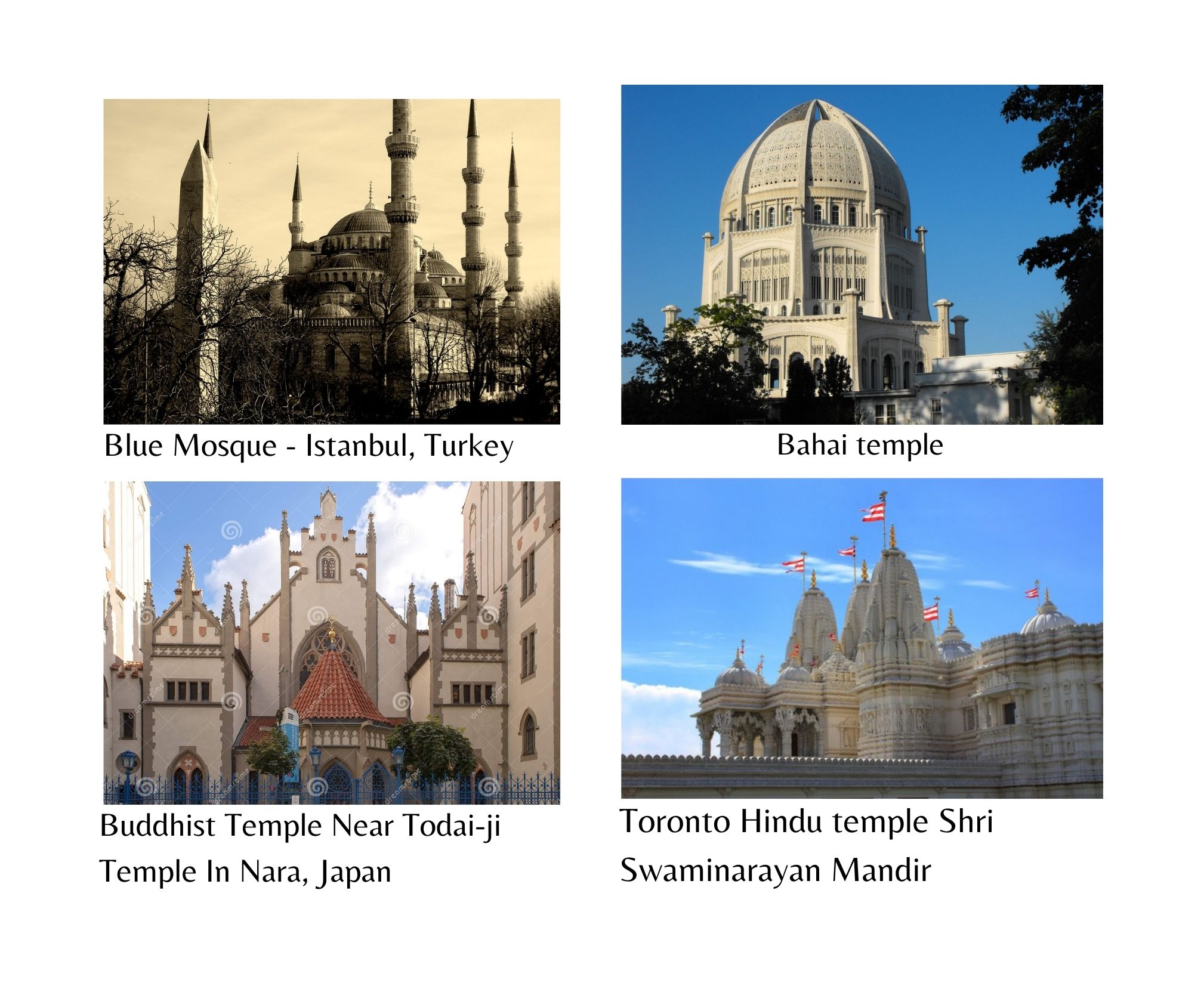
The Question Is WHY?
What we must ask ourselves is: Why is it that these religious organizations, some of which admonish us to not worship idols, have obelisks all over their edifices monuments to, what they proclaim is, a pagan deity? Is there something that they know that they just are not telling? What is being kept in the dark from us? Could it be possible that we might be worshiping this pagan deity without being aware of it? Is it possible?
What this reveals is that there is only ONE (1) RELIGION, manifesting in various forms.
Hidden from the masses, reveal only to the chosen few.
if this has been informational please share